


Using AI to Streamline Your Blog Workflow
- Posted in:
- Artificial intelligence
Blogging remains one of the most effective ways to build authority and drive traffic to your website. But let's be honest, it is a massive time commitment.
Between brainstorming topics, conducting research, drafting, editing, and optimizing for search engines, the process can feel endless.
The good news is that artificial intelligence (AI) has changed the game. It is not about replacing the human writer; it is about removing the friction that slows you down.
By integrating AI into your blog creation workflow, you can cut production time while maintaining the quality of your content.
Here is how you can use AI to work smarter, not harder.
Why Blogging Takes So Long
Most writers agree that the hardest part of blogging is writing that first initial draft.
If you find yourself constantly stuck at this stage, you aren't alone.
This is exactly where smart tools can step in to handle the heavy lifting.
You can overcome this initial block instantly with an AI Blog Post Generator, which creates a structured, SEO-optimized draft in seconds based on your specific topic and keywords.
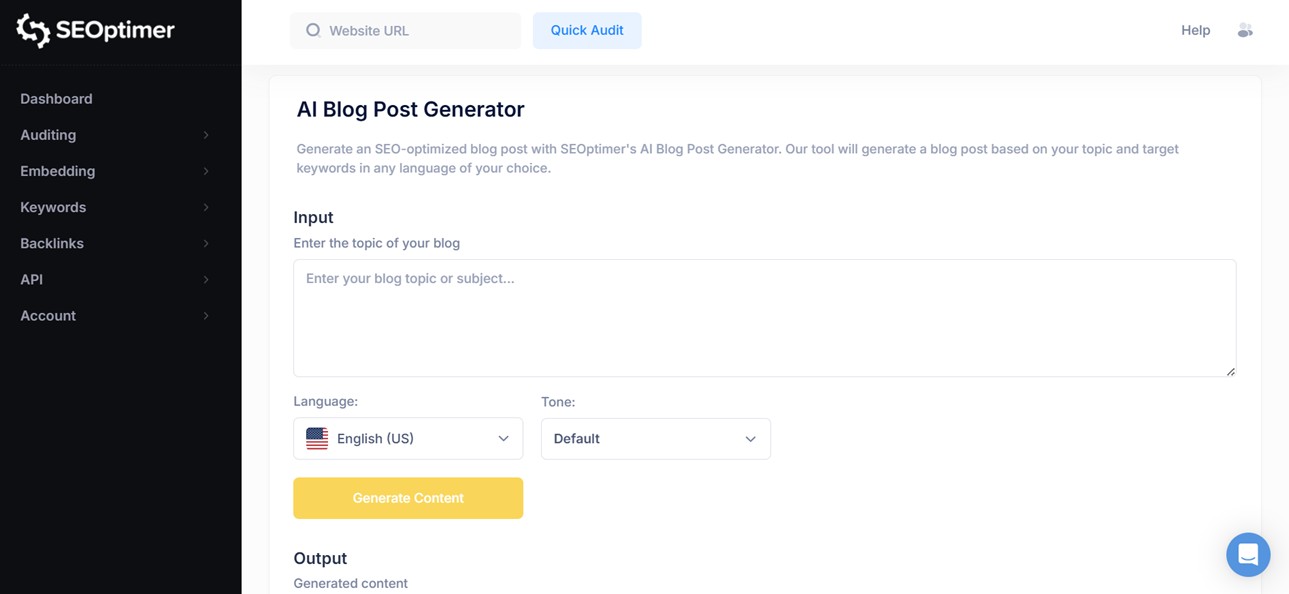
Once you get past that initial obstacle, the rest of the workflow becomes about refinement rather than creation from scratch.
Step 1: Generate Better Blog Ideas Faster
Consistency is key in blogging, but keeping a content calendar full is exhausting. Eventually, you run out of fresh angles.
AI excels at pattern recognition and brainstorming.
Instead of waiting for inspiration to strike, you can use AI to generate dozens of topic ideas in minutes.
Try asking your favorite AI tool to:
- List 10 blog post ideas about [your industry] that address common customer pain points.
- Suggest 5 contrarian viewpoints on [popular industry trend].
- Provide questions that beginners in [your niche] are asking right now.
Step 2: Build a Strong Outline Before Writing
Writing without an outline is like driving without a map. You might get there eventually, but you will waste a lot of gas getting lost along the way.
A solid outline keeps your writing focused and prevents you from going off on tangents. AI tools can analyze top-ranking content in your niche to suggest headers and subheaders that search engines love.
Your outline should ideally include:
- A hook for the introduction.
- Key H2 and H3 headings.
- The main argument or takeaway for each section.
- Supporting statistics or data points to include.
By solidifying your structure before you write a single paragraph, you ensure your post flows logically and covers all necessary ground.
Step 3: Draft the First Version Using AI
This is where the magic happens. Instead of typing every word manually, you can use AI to generate a comprehensive first draft.
With an AI blog post generator, you can input your topic and target keywords, and select the language you need.
Crucially, you can also set the Tone.
Whether your brand voice is Professional, Casual, Friendly, Authoritative, or Humorous, the AI can adapt its output to match.
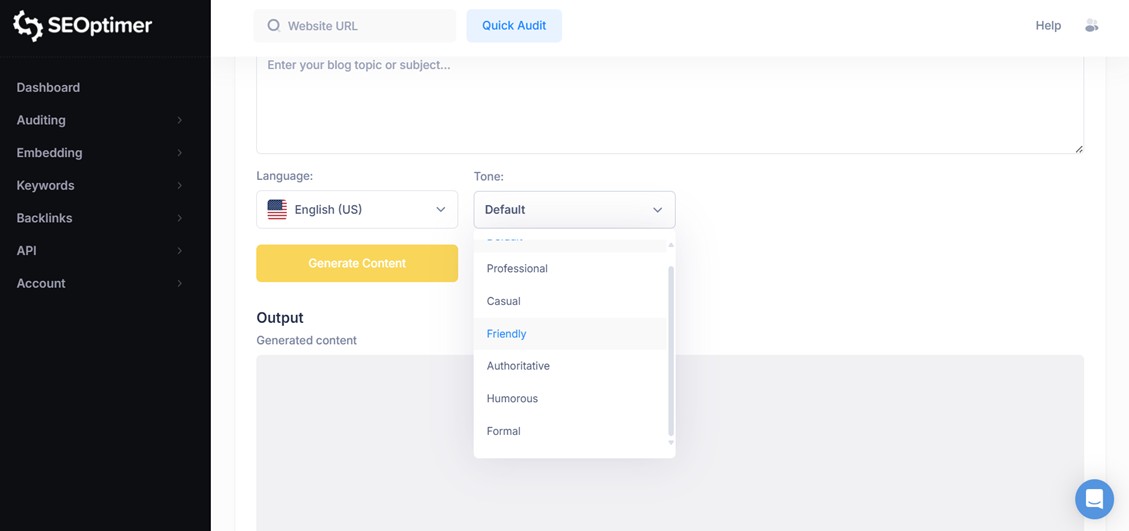
This draft serves as your foundation. It puts words on the page so you have something tangible to work with. It creates the structure, fills in the body paragraphs, and ensures your target keywords are included naturally.
Note: Google's guidance on AI content focuses on "people-first" content. Automation is acceptable, provided it adds value and isn't just generated to manipulate search rankings. Always review the AI draft to ensure it aligns with your expertise.
Step 4: Improve Readability
Once you have your AI-generated draft, it is time to put on your editor's hat. AI can sometimes be verbose or use complex sentence structures that are hard to read.
Your goal is to make the content effortless for your reader to consume. High readability keeps visitors on your page longer, which sends positive signals to search engines.
Focus on these editing tasks:
- Shorten your sentences. Try to keep sentences under 20 words where possible.
- Use an active voice. "The team wrote the post" is better than "The post was written by the team."
- Break up text. Use bullet points, numbered lists, and plenty of white space.
- Humanize the copy. Add personal anecdotes, specific examples, or strong opinions that an AI might not have access to.
Step 5: Optimize the Post for SEO
The final step is ensuring your content can be found. Even the best blog post won't drive traffic if search engines can't understand what it is about.
While your initial AI draft likely included your target keywords, you need to ensure the technical elements are perfect.
- Meta Title: This is the first thing users see in search results. Keep it under 60 characters and include your primary keyword near the beginning.
- Meta Description: This is your ad copy. Keep it under 155 characters and make it compelling enough to click.
- Header Tags: Ensure your hierarchy is clear. Your title is H1, main sections are H2, and sub-points are H3.
- Image Alt Text: Describe your images for visually impaired users and search engine crawlers.
Using an SEO tool like SEOptimer.com to audit your draft before publishing can catch missed opportunities and ensure your content is primed to rank.
Work Smarter with AI
The days of spending four hours on a single blog post are over.
By leveraging AI for ideation, outlining, and drafting, you can reclaim your time and focus on what matters most: adding your unique expertise and value to the conversation.
Remember, the goal isn't to let AI do all the work. The goal is to let AI handle the repetitive, time-consuming tasks so you can focus on strategy and quality.