


What Is ID Document Verification and Why It Matters More Than Ever
- Posted in:
- Security
In a world where identity fraud costs businesses and individuals billions of dollars annually, ID document verification has shifted from a back-office compliance function to a frontline defence mechanism. Whether you're opening a bank account online, boarding a flight, or registering for a healthcare portal, the ability to confirm that a person is who they claim to be backed by a legitimate, unaltered identity document is at the heart of modern trust infrastructure.
Yet for most people, the process remains something of a black box. A camera flashes, a document gets scanned, a few seconds pass, and access is either granted or denied. What happens in between is far more sophisticated than most realise.
Understanding ID Document Verification: The Core Concept
At its most fundamental level, ID document verification is the process of confirming the authenticity of a government-issued identity document, a passport, driver's license, national ID card, or residence permit and then matching that document to the individual presenting it.
This involves two distinct but interrelated steps. The first is document authentication: determining whether the physical or digital document is genuine, unaltered, and consistent with the issuing authority's known standards. The second is identity binding: confirming that the document actually belongs to the person submitting it, typically through biometric comparison such as facial recognition or liveness detection.
These two layers together form what security professionals refer to as a complete identity proofing workflow. Neither step alone is sufficient. A valid document presented by the wrong person is still a fraud risk. A real person presenting a forged document is equally dangerous.
How the Verification Process Actually Works
Document Capture and Extraction
The process begins when a user submits their identity document, either by photographing it with a smartphone, uploading a scan, or presenting it to a live agent equipped with a document reader. Optical character recognition (OCR) technology then extracts key data fields, name, date of birth, document number, and expiry date from the machine-readable zones (MRZ) or the visual inspection zone (VIZ).
Modern systems cross-reference these two zones automatically. If the printed text on the front of a passport doesn't match the MRZ strip, that discrepancy flags the document for further review.
Authenticity Checks
Sophisticated verification platforms then run the extracted document through a battery of checks. These include verifying the structural layout against a database of thousands of known document templates from countries worldwide, analysing security features such as holograms, microprinting, and UV-reactive inks (in physical verification settings), and detecting signs of digital manipulation, pixel-level inconsistencies, cloned regions, or metadata anomalies that suggest the document image has been edited.
In real-world practice, the most sophisticated forgeries are not crude Photoshop attempts. They involve high-quality counterfeit documents that replicate the visual appearance of legitimate IDs with considerable precision. This is why template-matching and machine learning-based anomaly detection have become indispensable.
Biometric Matching and Liveness Detection
Once the document clears the authenticity stage, the platform compares the photograph on the document to a selfie or video submitted by the user. Facial recognition algorithms calculate the geometric similarity between the two images, generating a confidence score.
Liveness detection, sometimes called anti-spoofing, goes one step further by verifying that the selfie was taken from a real, present individual rather than a printed photograph or screen replay. Users may be asked to blink, turn their head, or follow a moving object to confirm physical presence.
Why Businesses Across Every Sector Now Depend on It
Financial Services and KYC Compliance
Banks, fintech platforms, and cryptocurrency exchanges operate under stringent Know Your Customer (KYC) and Anti-Money Laundering (AML) regulations. Regulators in most jurisdictions require financial institutions to verify the identity of new customers before any account is opened or funds are transferred. Manual document review simply cannot scale to the volume of digital onboarding modern platforms handle.
Automated ID document verification allows these institutions to meet regulatory requirements in seconds rather than days, dramatically reducing onboarding friction while simultaneously strengthening compliance posture.
Healthcare and Telehealth
Patient identity verification has become a critical concern in healthcare, particularly as telehealth expands access to prescriptions and sensitive medical records. Verifying that a patient is who they claim to be protects both the individual and the provider from identity fraud, duplicate records, and prescription abuse.
Travel, Hospitality, and Border Control
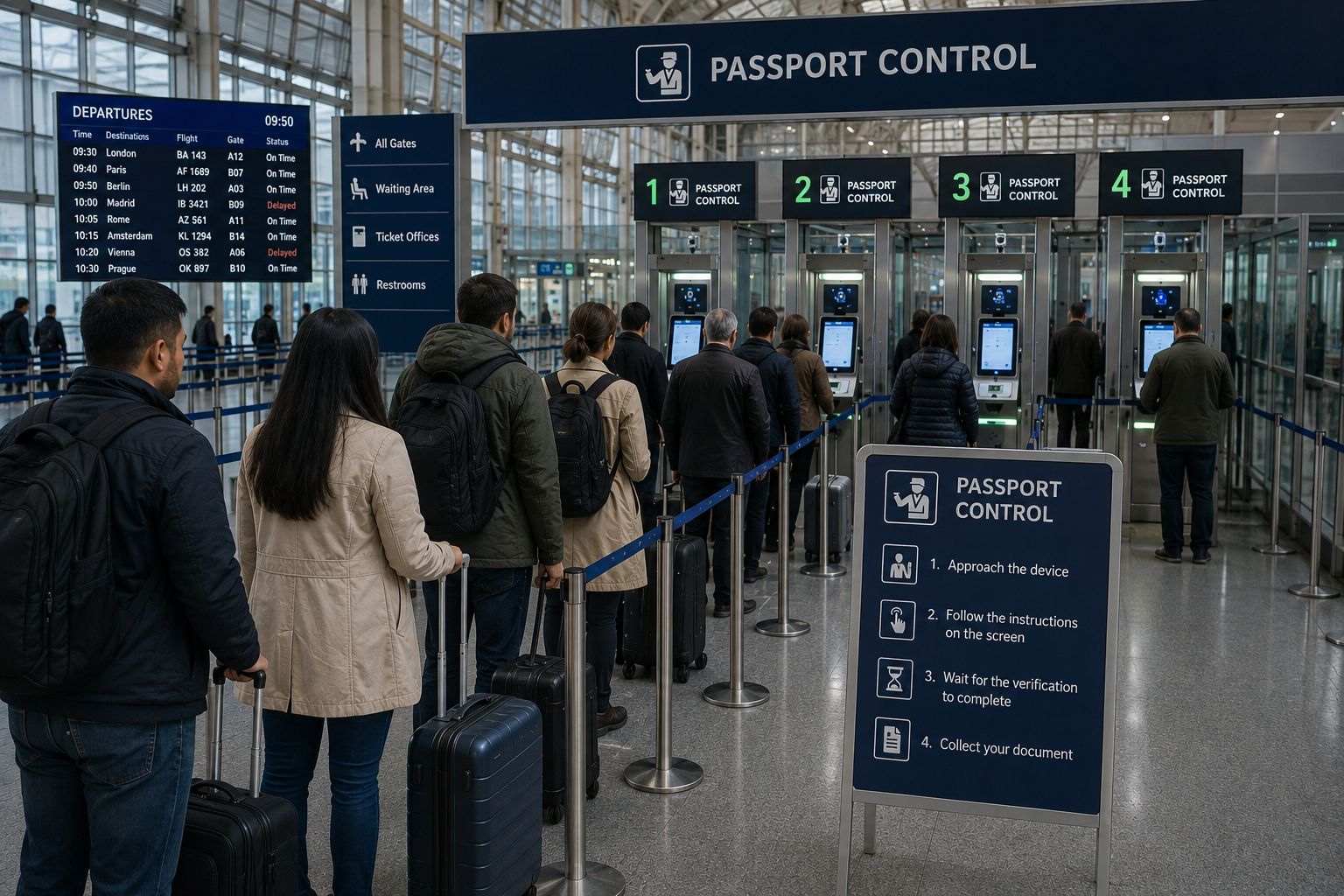
Airlines, hotels, and border agencies have long relied on document inspection. The shift to digital and automated verification has accelerated this process considerably, enabling self-service check-in, e-gates at airports, and remote guest authentication for short-term rental platforms, all without sacrificing accuracy or security.
Gig Economy and Workforce Platforms
From rideshare drivers to freelance professionals, platforms that connect individuals for paid services have a direct liability exposure if the people on their network aren't who they claim to be. Identity verification protects both the platform and the end user.
Common Challenges and Where Systems Fall Short
Document Coverage Gaps
No single verification platform covers every document type from every country with equal accuracy. Older documents, regional variations within the same country, or rare document types can introduce uncertainty. From a strategic perspective, organisations should evaluate whether a given platform's template library covers the geographic distribution of their actual user base, not just the top twenty issuing countries.
Fraud Evolution
As verification systems improve, so do fraudulent techniques. Deepfake technology has introduced a new frontier of synthetic identity fraud, where AI-generated faces can bypass facial recognition systems not specifically trained to detect them. Platforms that don't invest in continuous model updates risk falling behind adversarial actors who treat fraud as an iterative engineering problem.
Balancing Security with User Experience
Experienced professionals often notice a persistent tension between security rigour and conversion rates. A verification flow that requires too many steps, takes too long, or fails legitimate users at high rates creates real business costs. The best implementations find that balance through progressive friction, applying more rigorous checks selectively when risk signals are elevated, rather than treating every user as equally suspect.
Privacy and Data Retention
Collecting biometric and document data introduces significant privacy obligations. GDPR in Europe, CCPA in California, and a growing constellation of regional data protection frameworks impose strict requirements on how long this data can be retained, how it must be secured, and under what conditions it can be shared. Organisations must treat their verification data architecture as a compliance surface in its own right.
The Shift Toward Decentralised and Privacy-Preserving Identity
The next evolution in ID document verification is moving away from centralised data storage toward models where the individual retains control of their verified identity. Verifiable credentials and decentralised identity frameworks allow a person to prove attributes such as their age, nationality, and professional qualifications without handing over the underlying document itself.
This shift addresses one of the most persistent criticisms of current verification infrastructure: the systemic risk created when sensitive identity data is aggregated in central repositories that become high-value targets for data breaches.
What to Look for in a Verification Solution
Organisations evaluating verification platforms should look beyond headline accuracy claims. The questions that matter most in practice include: How quickly does the system process documents under real-world conditions, including low-quality images and poor lighting? What are the false acceptance rate and the false rejection rate, and how are those thresholds calibrated? Does the platform provide an auditable decision trail that satisfies regulatory reviewers? And critically, how does the vendor handle edge cases, documents it hasn't seen before, or ambiguous results that fall below the confidence threshold?
Transparency in how decisions are made is increasingly a differentiator, not just a nice-to-have.
Conclusion
ID document verification is no longer an optional infrastructure. It is the mechanism by which digital trust is established and maintained at scale. As identity fraud grows more sophisticated and regulatory expectations become more demanding, the gap between organisations that invest in rigorous verification and those that don't will only widen.
Understanding how the process works, its strengths, its limitations, and the direction it's heading equips businesses and individuals alike to navigate the digital identity landscape with greater clarity. The stakes are high enough that superficial solutions carry genuine risk. The right approach is one built on depth, transparency, and a commitment to staying ahead of the threats that verification is designed to stop.